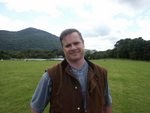


First I’d like to thank all who wished me a safe trip back to Afghanistan. I made it back to Kabul in one piece, but not without a little “adventure.” Things were going smoothly. My Emirates flight into Dubai was about 25 minutes early. So far so good.
As we made our approach, however, I noticed that the belly camera and the nose camera views were blank. (Emirates has video cameras that let you see the pilot’s view and the view beneath the plane throughout the flight. This is a neat feature since every passenger has their own screen.) Dubai is a big modern city with LOTS of lights, so even at 1AM there should have been something on the cameras. Suddenly the engines revved the nose went up and the plane began a turn.
I switched to the flight path view and noticed that we were now in a loop around the airport. We made two more approaches before the pilot came over the intercom to announce that the fog was so thick that he couldn’t find the runway (that explained why the cameras were blank) and we were diverting to Al Ain, a service airport about 100 miles south of Dubai, because we now didn’t have enough fuel to make another attempted landing. We couldn’t land “blind” because the airport instrumentation that would have allowed it was malfunctioning.
Upon landing at Al Ain we were joined by nine other airliners. This presented a problem. Al Ain, being a service field, though large enough for big airliner landings and takeoffs, isn’t equipped to service fully loaded aircraft. Nor was there enough fuel on hand to refuel one, let alone ten jumbo’s. So they had to organize a fuel convoy from Dubai and this took time plus the two-hour trip, plus the time required to actually fuel a Boeing 777. At ten, this field was out of room for any more aircraft, so others were diverted to Doha, Muscat, Kuwait City, Dammam and other smaller fields depending on the aircraft.
In the midst of this, the crew had reached their time limit, so even if all the fog miraculously disappeared and we were given clearance, we could not take off until the crew was replaced. Emirates was on top of the situation and the new crew was alerted, organized and dispatched by bus as soon as we landed at Al Ain. Actually, they did this for all seven of their 777’s at Al Ain, so it was a pretty impressive operation.
Emirates could not put us on busses and take us overland to Dubai to make connections because there are no Customs or passport facilities at Al Ain. By 6AM all existing food and drink supplies were exhausted, but luckily Emirates had again thought ahead and cases of water arrived by 6:30 along with a resupply of toilet paper. These at least were on hand at Al Ain, but there was no possibility of food for the 3,000 plus passengers on the ten 777’s and 747’s parked on the field.
About the time the water arrived the new pilot made the observation that now the fog had lifted in Dubai. However, the fog didn’t so much lift as shift…to Al Ain. Al Ain’s minimums are more restrictive than Dubai, so we could not take off. Even if we could have technically taken off, by this time there were as many as thirty aircraft already in holding patterns over the Gulf waiting to land at Dubai. The airborne aircraft had priority to land, so we had to wait for twenty aircraft to land before we were given clearance for takeoff at about 10AM for the twenty-five minute flight to Dubai.
Needless-to-say by this time everyone with a connecting flight had missed it, including yours truly. For those who were able to book their entire trip through Emirates, the airline took care of all the re-ticketing, hotel rooms where necessary and other compensation. But Emirates doesn’t have any agreements with the airlines that service Kabul, so I was on my own to solve my problem.
By the time I cleared Customs and Immigration, collected my bags and made my way by taxi to Terminal 2, it was 11:15. The next flight to Kabul was at 1PM, so clearing Customs and Immigration and Security (which you must do before getting to a ticket counter) was going to be tight. I made it and got to the desk by 11:30. Being polite, smiling and speaking a little Arabic goes a long way for a Gringo trying to hurry through these hurdles in a Gulf State country. In fact, all I had to say at the first checkpoint was that I was trying to get on the Kabul flight and I got an escort past all the other people ahead of me bound for other destinations.
Once at the counter I found, to my relief, that the afternoon flight had plenty of seats. (I filed this away for future reference. Thursday is the start of the Muslim weekend and most people try for the early flights into Kabul, hence half-empty Thursday afternoon KamAir flights. About half of the passengers on this flight were those who had missed the morning flight.) Of course the morning problems had a ripple effect and the scheduled 1PM departure wound up being delayed until 2PM, but we still missed our scheduled arrival time by only about 20 minutes.
Arriving in Kabul went smoothly. The airport was relatively quiet, this being Thursday afternoon, but Customs and Immigration also go a little faster when you smile and speak Dari. So apart from spending about 20 hours in an airplane plus six hours in airports, the trip back was pretty good.
By popular demand - Ello and Barbara Martin asked - I’ll post some pictures from Scotland in my next post before returning to Afghan topics.
Friday, January 30, 2009


Tuesday, January 27, 2009
On The Way Back to Afghanistan
Hey all! Just a quick note.
Believe it or not, once I left Edinburgh a week ago I found it almost impossible to get an Internet connection. The place I was staying could not get their Wi-Fi working. Back at Glasgow Airport for the flight out tomorrow. I'll be back in Afghanistan on 29 January. I'll post again then.
Believe it or not, once I left Edinburgh a week ago I found it almost impossible to get an Internet connection. The place I was staying could not get their Wi-Fi working. Back at Glasgow Airport for the flight out tomorrow. I'll be back in Afghanistan on 29 January. I'll post again then.
Tuesday, January 6, 2009
Today is Ashura
This year January 7 is the day of Ashura, marked by Muslims as a whole, but for Shia Muslims it is a major religious festival which commemorates the martyrdom at Karbala of Hussein, a grandson of the Prophet Mohammad.
It falls on the 10th of Muharram, the first month of the Islamic lunar calendar. Muslims as a whole celebrate Ashura with a voluntary day of fasting which commemorates the day Noah left the Ark, and the day that Moses was saved from the Egyptians by God.
For Shia Muslims, Ashura is a solemn day mourning the martyrdom of Hussein in 680 C.E. at Karbala in modern-day Iraq. It is made up of mourning rituals and passion plays re-enacting his martyrdom. Shia men and women dressed in black parade through the streets slapping their chests and chanting. Some Shia men seek to emulate the suffering of Hussein by flagellating themselves with chains or cutting their foreheads until blood streams from their bodies.
Some Shia leaders and groups discourage the bloodletting, because it creates a backward and negative image of Shia Muslims and instead encourage people to donate blood as an alternative.
The killing of Hussein led to the split of Islam into two main sects - Sunnis and Shias. In early Islamic history the Shia were a political faction -- the "party of Ali" -- that supported Ali, son-in-law of the Prophet Mohammed and the fourth caliph of the Muslim community.
Ali was murdered in 661 C.E. and his chief opponent, Muawiya, became caliph. The great schism between Sunnis and Shias occurred when Imam Ali did not succeed as leader of the Islamic community at the death of the Prophet. Caliph Muawiya was later succeeded by his son Yazid, but Ali's son Hussein refused to accept his legitimacy and fighting between the two ensued. Hussein and his followers were massacred in battle near Karbala in 680 C.E. Both Ali's and Hussein's deaths gave rise to the Shia cult of martyrdom, their sense of betrayal and struggle against injustice, oppression and tyranny.
Today, the Shias make up about 15% of the total worldwide Muslim population. In Afghanistan, they make up about 25% of the population with the vast majority of those being Hazara.
When the Taliban were in power, the Shia were not allowed to openly commemorate Ashura. This week Kabul, Sunni mullahs and political leaders joined with Shia in prayer, fasting and alms for the poor to commemorate Ashura. Today is an official holiday, so stores are closed and Afghans are not working. This open tolerance for religious difference is the more traditional Afghan attitude toward religion. The intolerant version of Islam that the Taliban introduced was alien to traditional Afghan culture and custom.


The next three pictures show how individuals with vehicles let you know they are Shia.


Speaking of smiles and alms at Ashura, pop on over here and help our blogging buddy Travis Erwin. His house burned to the ground on
4 January. What a crappy New Year. Help make it a better one!
Let's use the power of the blogoshpere to generate something more than hot air!
It falls on the 10th of Muharram, the first month of the Islamic lunar calendar. Muslims as a whole celebrate Ashura with a voluntary day of fasting which commemorates the day Noah left the Ark, and the day that Moses was saved from the Egyptians by God.
For Shia Muslims, Ashura is a solemn day mourning the martyrdom of Hussein in 680 C.E. at Karbala in modern-day Iraq. It is made up of mourning rituals and passion plays re-enacting his martyrdom. Shia men and women dressed in black parade through the streets slapping their chests and chanting. Some Shia men seek to emulate the suffering of Hussein by flagellating themselves with chains or cutting their foreheads until blood streams from their bodies.
Some Shia leaders and groups discourage the bloodletting, because it creates a backward and negative image of Shia Muslims and instead encourage people to donate blood as an alternative.
The killing of Hussein led to the split of Islam into two main sects - Sunnis and Shias. In early Islamic history the Shia were a political faction -- the "party of Ali" -- that supported Ali, son-in-law of the Prophet Mohammed and the fourth caliph of the Muslim community.
Ali was murdered in 661 C.E. and his chief opponent, Muawiya, became caliph. The great schism between Sunnis and Shias occurred when Imam Ali did not succeed as leader of the Islamic community at the death of the Prophet. Caliph Muawiya was later succeeded by his son Yazid, but Ali's son Hussein refused to accept his legitimacy and fighting between the two ensued. Hussein and his followers were massacred in battle near Karbala in 680 C.E. Both Ali's and Hussein's deaths gave rise to the Shia cult of martyrdom, their sense of betrayal and struggle against injustice, oppression and tyranny.
Today, the Shias make up about 15% of the total worldwide Muslim population. In Afghanistan, they make up about 25% of the population with the vast majority of those being Hazara.
When the Taliban were in power, the Shia were not allowed to openly commemorate Ashura. This week Kabul, Sunni mullahs and political leaders joined with Shia in prayer, fasting and alms for the poor to commemorate Ashura. Today is an official holiday, so stores are closed and Afghans are not working. This open tolerance for religious difference is the more traditional Afghan attitude toward religion. The intolerant version of Islam that the Taliban introduced was alien to traditional Afghan culture and custom.

Winter wonderland.
Unless you don't have enough warm clothes,
or firewood, or shelter, or food.
Winter is a bad time for many Afghans.

Baby it's cold outside!
The next three pictures show how individuals with vehicles let you know they are Shia.


And then there are the larger preparations.

One of the 13 members of Parliament killed in the suicide bombing
on 7 November 2007 in Baghlan province was Shia.
He's a new Shia hero/martyr, so they will have a ceremony at the gravesite.

You find these set up all over town.
They were offereing hot drinks and sweets in tent in the foreground.

This in a predominantly Tajik neighborhood.
Most Tajiks are Sunni.

The Hazara go all out!
All along this road special stands are offering hot drinks and sweets.

Cut off at the donkey crossing!
Attempting to get the water back up the hill,
these boys got cut off by the heavy traffic.
Note the smile.
Afghans seem to find a smile even when things aren't quite working out.
Speaking of smiles and alms at Ashura, pop on over here and help our blogging buddy Travis Erwin. His house burned to the ground on
4 January. What a crappy New Year. Help make it a better one!
Let's use the power of the blogoshpere to generate something more than hot air!
Subscribe to:
Posts (Atom)
